


Languages Canada focuses
on building the next phase
of language education
Members of Languages Canada - the association representing public and private French and English language schools - gathered last week in Calgary, Alberta, to innovate, collaborate, and share insights on building the next phase of language education
Key points
Conference marked the national launch of the IRCC-compliant Joint Pathway Programme (JPP)
The association signed a new partnership with an international institute based in Mexico
Term-based reporting now mandatory for members, confirmed the association
Despite significant disruptions to Canada’s education landscape, including expanded PAL attestation restrictions, intensifying public debate surrounding immigration, declining enrolments and programme closure, the association has not stood still, highlighted Gary Gervais in his President’s welcome, adding its main priorities moving forward are to protect advocacy, support solutions and strengthen its network.
With no government representation this year - a conscious decision to maintain open and candid dialogue - Executive Director Gonzalo Peralta encouraged members to pursue innovation in markets, programmes, technology, and partnerships to better support Canada’s recovery and define its new position.
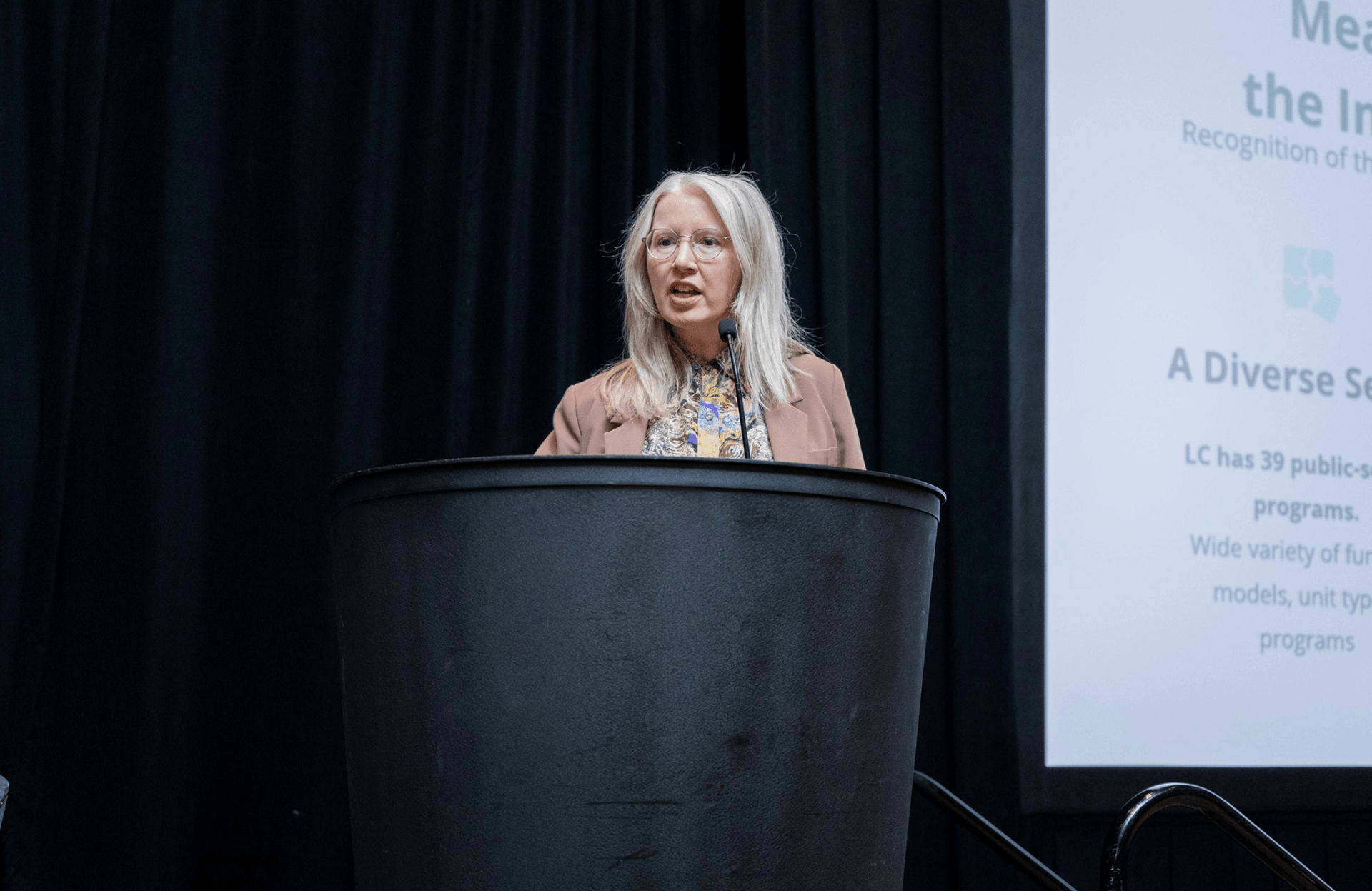
Dr Jennifer MacDonald, newly appointed Director, Academic Partnerships at Languages Canada (1)
The conference marked the national launch of the IRCC-compliant Joint Pathway Programme (JPP), a glowing example of how the association is rebuilding through innovation. Through this structured collaboration between accredited public and private programme members, the JPP will fundamentally strengthen how international students move through the Canadian education system, said Gonzalo, as well as increase recruitment power by leveraging recruitment pipelines.
Dr Jennifer MacDonald, newly appointed Director, Academic Partnerships at Languages Canada / Langues Canada , hosted an introductory session on the JPP alongside Stephanie Samboo, Associate Dean at Sheridan College (public member) and Angela Johnston, Vice President, Academic at ILAC Education Group (private member), both part of the initial Ontario pilot.
Jennifer confirmed it had set an achievable target of building pathways back to 10 per cent of all LC students by 2028, and said there is ongoing engagement with provincial governments as it enables broader participation across the LC membership. Members that had met conditions of participation in the JPP were given the opportunity to have one-to-one partnership meetings during the conference.
Dr Raynie Wood, Executive Director of the Alberta Bureau of International Education (ABIE), Olle Lagerquist, Associate Vice President Industry Solutions at Northern Alberta Institute of Technology (NAIT) and Werner Beylefeld, Associate Vice President, International at Southern Alberta Institute of Technology (SAIT) were part of a keynote panel on Innovation in Practice, guiding delegates through the practicalities of driving change in larger institutions. The panel encouraged participants to be bold, pilot new projects, and accept that while some will succeed and others won’t, each offers valuable lessons.
In Mexico, there’s been a clear push toward language training for specific purposes, particularly tied to employability and industry needs rather than General English or French alone. During the conference, Languages Canada signed a partnership with Global Skills Institute (GSI), an international institute based in Mexico that designs programmes connecting education, workforce development and international mobility.
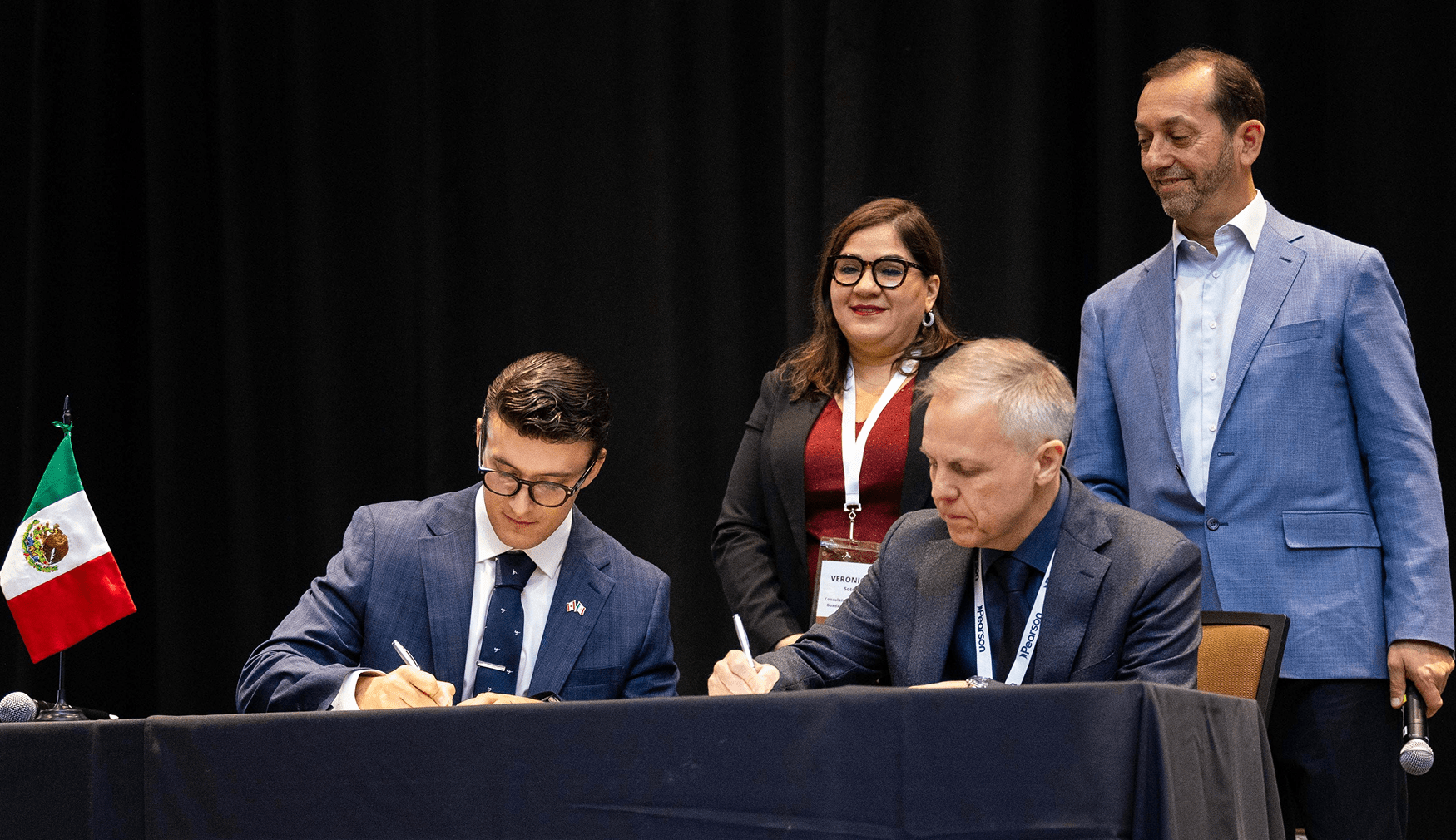
Diego Hernandez Huerta, CEO & Founder of Global Skills Institute and Gary Gervais, President of Languages Canada, signing a new partnership (2)
Further partnership opportunities for English and French for specific professional, technical and academic purposes in Mexico were explored in a session with the Trade Commissioner for Canada in Guadalajara, Mexico, Veronica Soto, and two Mexican institutions (current partners of Languages Canada), Universidad Tecnológica de Jalisco (UTJ) and Universidad Tecnológica Metropolitana de San Luis Potosi.
Carlos Cantu, Education Partnerships Director Canada at LanguageCert delivered a session on how AI is transforming English proficiency testing. As threats like deepfakes and impersonation evolve, exam providers must balance AI-driven assessment with rigorous human oversight and enhanced guardrails, such as liveness detection, to protect test integrity, he said.
Dhalia Younan, International Recruitment Officer at York University and Stephen Carey of the not-for-profit English Language Standard Advisory Authority (ELSAA), called for a fairer, more transparent English language proficiency testing landscape in their session Buzzwords or Benchmarks? They shared practical guidance on selecting which tests to accept, highlighting key considerations such as academic outcomes, test security, fraud prevention, student support beyond scores, and transparency in scoring and validation.
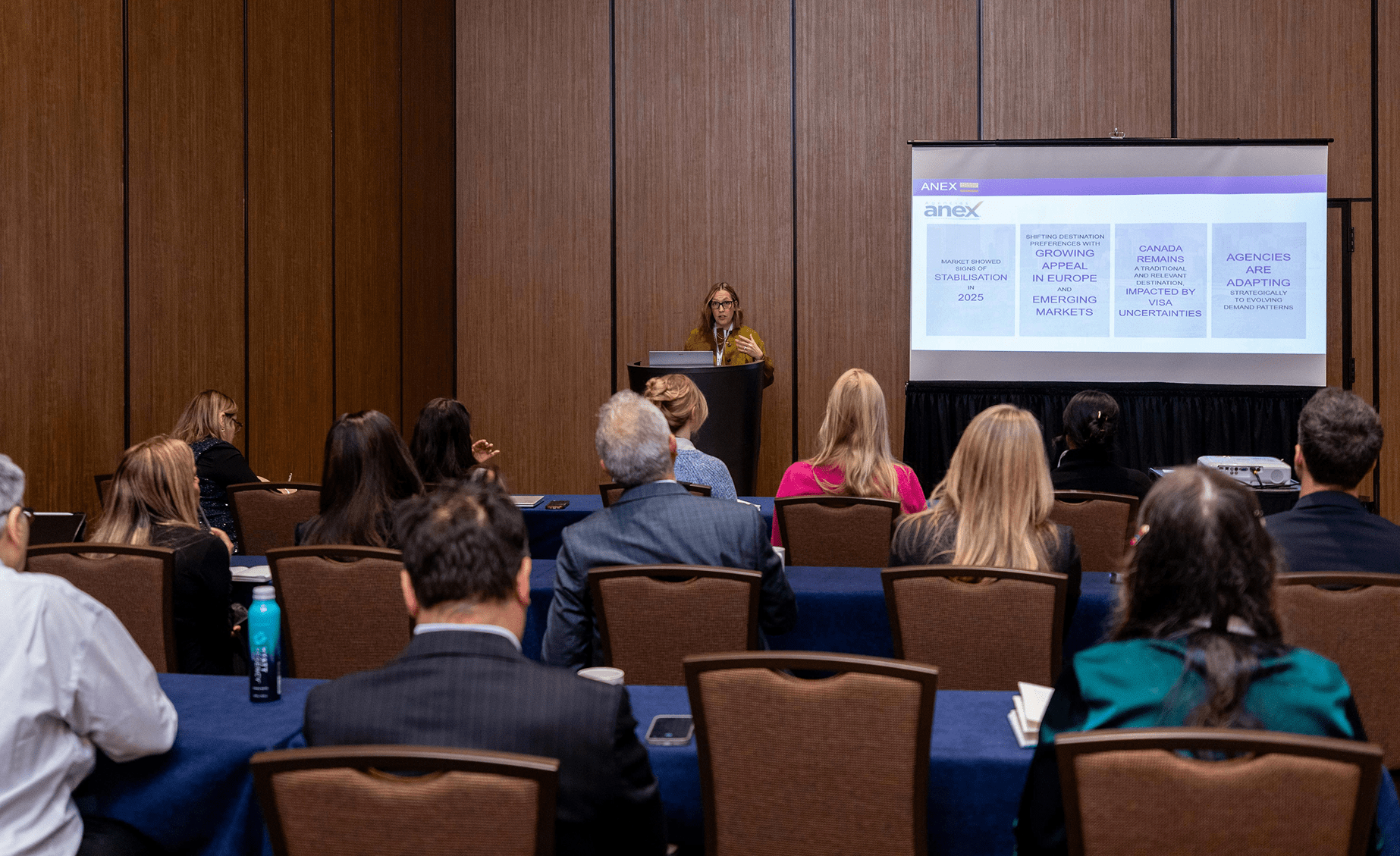
Nicola Hancox, Editor of StudyTravel Magazine, hosting a session on key agent markets for Canadian language school providers (3)
Analysing outbound agent survey data alongside inbound enrolment data from Languages Canada member schools, StudyTravel Magazine Editor, Nicola Hancox, examined Canada’s positioning in key inbound markets (Brazil, Mexico, Japan, South Korea and Colombia) and cast some market outlooks which included diversification beyond traditional General language and growth opportunity in the K-12 sector and structured pathway programmes.
Meanwhile, research partner BONARD shared highlights of its new term-based reportage scheme. The mandatory three-times-a-year reports include new categorisations for LC students (new or continuing) as well as data on student weeks, course and visa types, and nationalities. Head of International Education, Sarah Verkinova, said reporting with more regularity reveals seasonal trends, enabling members to make more informed recruitment decisions rather than relying on annual data, which can hide patterns.
At a glance, both public and private institutions enrolled more students in Term 2, accounting for 43 per cent of total students enrolled. There was little change in the top 10 source markets in T1, T2 and T3, however, as a region, Europe showed stronger seasonality, with 55 per cent enrolling in T2 compared with 22 per cent in T1 and 21 per cent in T3. Latin American enrolments were also stronger in the first half of the year (T1 33 per cent, T2 43 per cent).
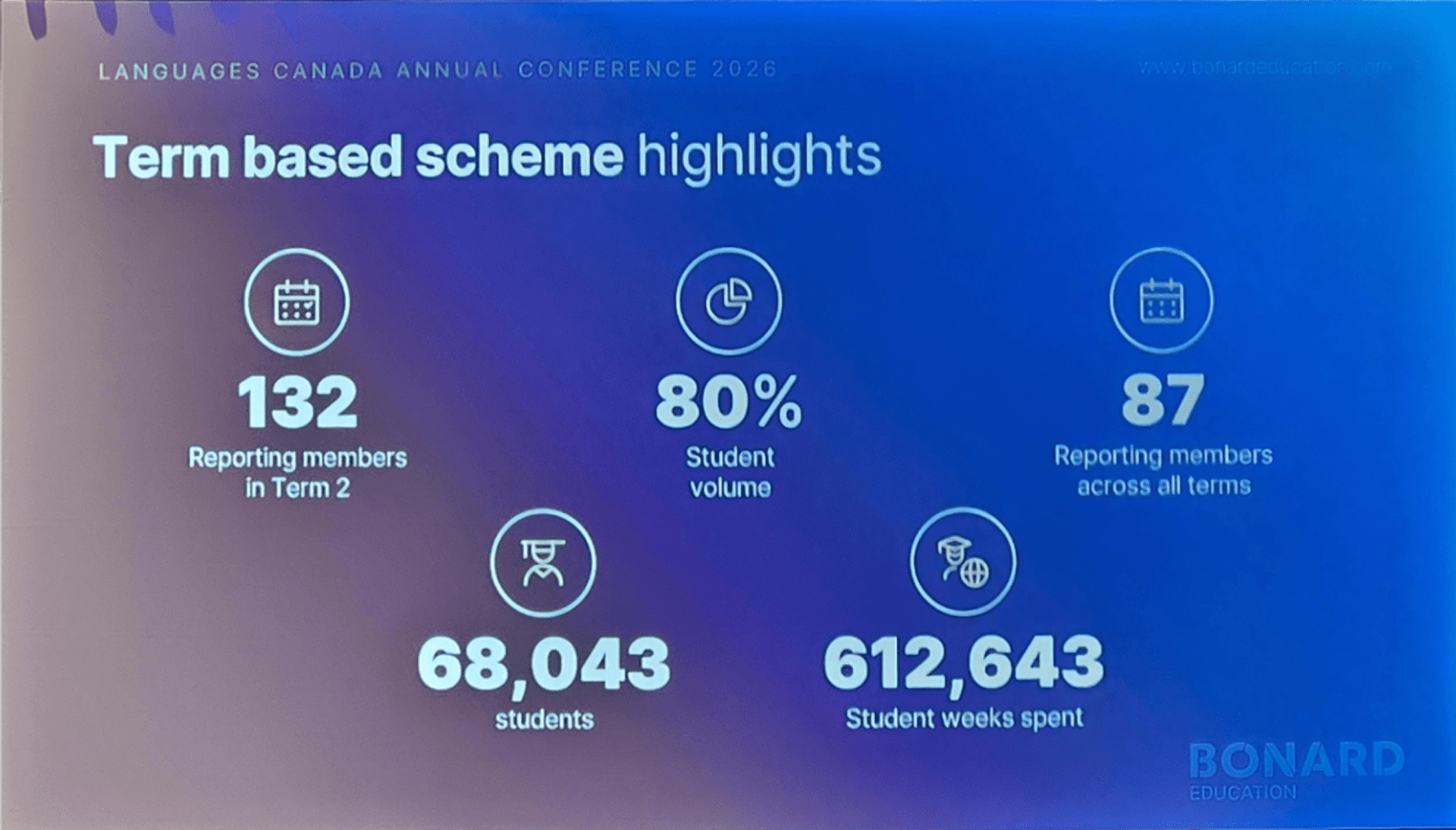
Bonard/LC is producing termly member reports, in addition to its annual one
Elsewhere, Jennifer Wilson of the Canada Homestay Network and Oak Bay Coaching & Consulting delivered two sessions on marketing homestay to overseas partners and coaching for performance. Sara Davila, an education and technology consultant, led a session on institutional AI adoption, while Ergio Guitan from Atpal Languages and Angela Johnston from ILAC gave a step-by-step account of their successful cross-provincial alliance, aligning French language provision with national objectives to grow francophone immigration levels.
Languages Canada / Langues Canada currently has 161 member programmes and is a member of the Gaela - Global Alliance of Education & Language Associations . In 2027, the association will host its 20th annual conference in Vancouver.
CONTACT FORM
Find out how we can cater to your specific needs
We look forward to assisting you further and explaining how our services can benefit you.