


Working with education agents is one of the most effective ways for institutions to grow and diversify international student pipelines. Yet each market has its own communication style, expectations, and pace of doing business.
Understanding these nuances can significantly improve your student recruitment strategy, strengthen partnerships, and accelerate results when recruiting students globally.
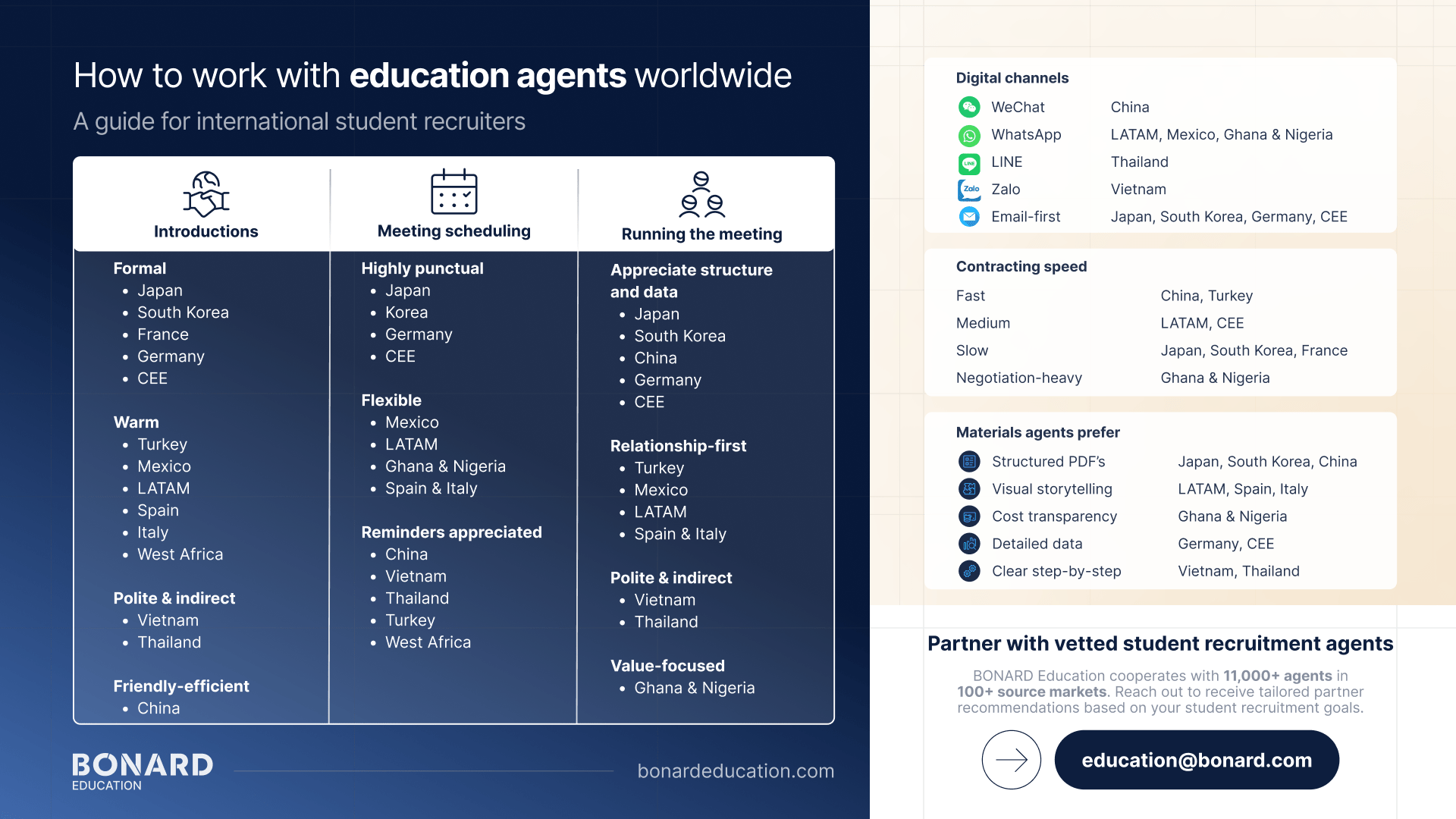
Drawing on BONARD Education’s 20+ years of global fieldwork - and cooperation with 11,000+ agents across 100+ source markets - this guide outlines several tips on how to engage with agents in the world’s major regions.
If you are short on time:
Here are the key takeaways for working effectively with education agents and improving your student recruitment strategy:
Tailor your approach to the source market. Communication styles differ significantly. From highly structured agent partners in CEE and Japan to more flexible, relationship-driven agencies in Mexico, LATAM, and West Africa.
China appreciates flexibility. Agents in China appreciate frequent confirmations, short meetings, and fast schedule changes - clarity and adaptability matter.
Professionalism and structure matter in North & East Asia. Japan and South Korea value formality, hierarchy, and detailed information when recruiting students.
Warmth builds trust in LATAM, Turkey, Spain & Italy. Start with personal rapport before discussing numbers or processes.
Africa tends to be value-driven and price-sensitive. Ghanaian and Nigerian agencies appreciate clear benefits, transparent fees, and consistent follow-up.
CEE and Germany prefer efficiency. Stick to agendas, provide concise data, and keep communication straightforward.
Why working with education agents matters
The right international student recruitment agency can help institutions:
enter new source markets quickly
improve conversion through trusted local counselling
gain insight into student preferences and decision drivers
build sustainable, diversified student recruitment portfolios
However, success depends not just on the partnership but on how well institutions align with local business practices.

Why working with education agents matters

Market
entry
Enter new source markets quickly

Trusted counselling
Improve conversion through local expertise

Student insights
Gain understanding of preferences and decision drivers

Market diversification
Build sustainable student recruitment pipelines
Market-by-market tips for working with education agents
🇨🇳 China: efficient, fast-paced, relationship-driven
1. Introductions
Friendly but efficient. Highlight your institution’s reputation, rankings, employability outcomes, and programme strengths early.
2. Scheduling meetings
value flexibility in meeting changes
multiple confirmations appreciated
Chinese agents prefer short, efficient meeting slots and will fill any open spot quickly.
3. Running the meeting
Keep presentations short
Focus on key facts, numbers, and student admissions requirements
Limit agendas to essentials - they value speed
4. Follow-up
Send a clean, written recap
Reminders are preferred
5. Additional Insights
Communication channel: WeChat (essential)
Materials: concise PPTs, infographics, clear visa guidance
Contracting: fast once interested
Event behaviour: frequent walk-ins; flexible scheduling
🇹🇷 Türkiye: personal connection builds long-term loyalty
1. Introductions
Warm, friendly introduction is appreciated. Establish a personal connection before business
2. Scheduling meetings
reliable and confirm times clearly
3. Running the meeting
warm, open conversation
they like to ask questions
enough time for decision-making is appreciated
4. Follow-up
appreciate clear written summary
personal trust is central
5. Additional insights
Communication channel: WhatsApp + email
Materials: programme highlights, scholarship options
Contracting: smooth; trust-driven
Event behaviour: prefer pre-booked meetings
🇨🇿🇵🇱🇭🇺 Central & Eastern Europe (CEE): structured, punctual, results-focused
CEE international student recruitment agencies prefer clarity and structure
1. Introductions
Direct, professional, and efficient
2. Scheduling meetings
Punctual, organised
An agenda in advance is appreciated
3. Running the meeting
They value concise, data-driven presentations
Focus on fees, processes, admissions, and results
4. Follow-up
Clear written summaries are appreciated
5. Additional Insights
Communication channel: email preferred
Materials: detailed PDFs, accreditations
Contracting: straightforward
Event behaviour: punctual and well prepared
🇫🇷 France: polite, competitive, expecting precision
The French market is saturated, so clarity matters
1. Introductions
Very polite, formal
2. Scheduling meetings
Expect several touchpoints to reach decision-makers
3. Running the meeting
Clearly articulate your value proposition
4. Follow-up
Multiple follow-ups appreciated
5. Additional insights
Materials: clear differentiation needed
Event behaviour: structured conversations
🇩🇪 Germany: detail-oriented, reliable, highly professional
German partners are efficient and dependable once engaged
1. Introductions
Professional and structured
2. Scheduling meetings
Highly punctual
3. Running the meeting
They tend to be detail-focused
Data and specifics are appreciated
4. Follow-up
Clear, concise, professional
5. Additional insights
Materials: thorough PDFs, compliance details
Event behaviour: well-organised, punctual crowds
🇪🇸 Spain & 🇮🇹 Italy: warm, open, and enthusiastic
Southern European agencies combine friendliness with a high interest in new opportunities
1. Introductions
Warm, friendly
2. Scheduling meetings
They value flexibility
Pre-meeting notice appreciated
3. Running the meeting
Open enthusiasm
Longer conversations
4. Follow-up
They value written next steps
5. Additional insights
Materials: videos, lifestyle visuals
Event behaviour: dynamic and engaging
🇲🇽 Mexico: warm, personable, relationship-driven
Mexican agencies thrive on personal connection
1. Introductions
warm, personable, conversational
2. Scheduling meetings
flexible; gentle reminders are appreciated
3. Running the meeting
relationship first → business second
informal conversation matters for Mexican agents
4. Follow-up
clear written summaries are appreciated
5. Additional insights
Communication channel: WhatsApp
Materials: videos, campus life content, success stories
Contracting: depends on relationship trust
Event behaviour: enjoy longer conversations; friendly engagement
🇻🇳 Vietnam: polite, indirect, detail-oriented
Vietnamese partners value respect and structured communication
1. Introductions
respectful tone
polite greetings
2. Scheduling meetings
pre-meeting notice appreciated
3. Running the meeting
avoid putting anyone on the spot
prepare clear brochures
structured but short meetings work best
4. Follow-up
provide detailed written materials
decisions involve multiple stakeholders
5. Additional insights
Communication channel: Zalo + email
Materials: scholarships, steps to apply, timelines
Event behaviour: structured approach, but not too formal
🇹🇭 Thailand: enthusiastic but indirect
Thai agents are kind and eager to collaborate, but often say “yes” to be polite
1. Introductions
kind, friendly, polite
2. Scheduling meetings
they often say “yes” to be polite → detail confirmation is appreciated
3. Running the meeting
prefer indirect communication and politeness
use clarifying or open-ended phrasing
4. Follow-up
double-checking agreements in writing is valued
5. Additional Insights
Communication channel: LINE + email
Materials: visual content, easy-to-read brochures
Event behaviour: open, enthusiastic
🇯🇵 Japan: formal, professional, credibility-focused
Japan remains one of the most structured and professional agency markets
1. Introductions
polite, structured, formal
proper greeting rituals matter
2. Scheduling meetings
very punctual, so running meetings exactly on time is highly appreciated
3. Running the meeting
prefer structured agendas, clear materials and logical frameworks
4. Follow-up
precise, professional email follow-up is valued
5. Additional Insights
Materials: compliance, safety, quality assurance
Contracting: slow, multiple approvals
Event behaviour: organised
🇰🇷 South Korea: hierarchy, formality, and trust
Structured and professional agency markets, with a stronger emphasis on hierarchy
1. Introductions
to make a good impression, using titles + last names is suggested
formal greetings
2. Scheduling meetings
very punctual, so running meetings exactly on time is highly appreciated
enough time for decision-making is appreciated
3. Running the meeting
value structure
rather avoid direct refusals
4. Follow-up
they appreciate rankings, safety details, and reassurances
5. Additional insights
Communication channel: email initially; KakaoTalk later
Contracting: slow and layered
Event behaviour: formal attire preferred
🇬🇭🇳🇬 Ghana & Nigeria: trust, value, and consistency
West African agencies value personal connection, professionalism, and transparency.
1. Introductions
warm, personable, respectful
using titles is valued
2. Scheduling meetings
they prefer flexibility in time or rescheduling
pre-meeting notice appreciated
3. Running the meeting
direct but courteous communication is appreciated
be transparent about pricing and value
4. Follow-up
we encourage to provide clear summaries with deadlines
variable follow-through → reminders appreciated
5. Additional insights
Communication channel: WhatsApp essential
Materials: cost breakdowns, payment plans
Contracting: negotiation expected
Event behaviour: may run behind schedule; flexible environments
LATAM (🇧🇷 Brazil, 🇨🇱 Chile, 🇨🇴 Colombia): friendly, talkative, relationship-first
LATAM partners are warm and enthusiastic.
1. Introductions
warm and conversational
2. Scheduling meetings
appreciate flexible scheduling
pre-meeting notice appreciated
3. Running the meeting
informal conversation builds trust before business
4. Follow-up
friendly communication
5. Additional insights
Communication channel: WhatsApp heavily preferred
Materials: emotional storytelling, visuals
Event behaviour: relationship-focused
Adapting your approach strengthens every partnership
A successful student recruitment strategy is never one-size-fits-all.
The most effective institutions are those that adapt their approach to each region, each partner, and each working style.
Understanding the norms of international student recruitment agencies - from agents in China to partners across Europe, Africa, and LATAM - enables educational institutions to build stronger, more sustainable student pipelines.
"Most efficient institutions adapt their approach to each region, each partner, and each working style"

A successful student recruitment strategy is never one-size-fits-all

Understand regional norms
Each market has unique communication styles and expectations

Build stronger partnerships
Adapt to each partner's working style and cultural context

Create sustainable pipelines
Long-term success comes from respecting local business practices
Looking ahead
If your institution is looking to partner with agencies, identify high-performing source markets, or benchmark competitors, BONARD Education can support you with:
CONTACT FORM
Partner with vetted student recruitment agents
Through our active cooperation with 11,000+ vetted education agents worldwide, BONARD Education can help you identify the right partners based on your specific student recruitment goals
Since 2007, we have supported educational institutions globally by building reliable agent networks, tracking international student demand, analysing visa trends, and monitoring market shifts.
Submit the form to access agent recommendations and strengthen your institution’s student recruitment planning.